Tuesday, September 6, 2011

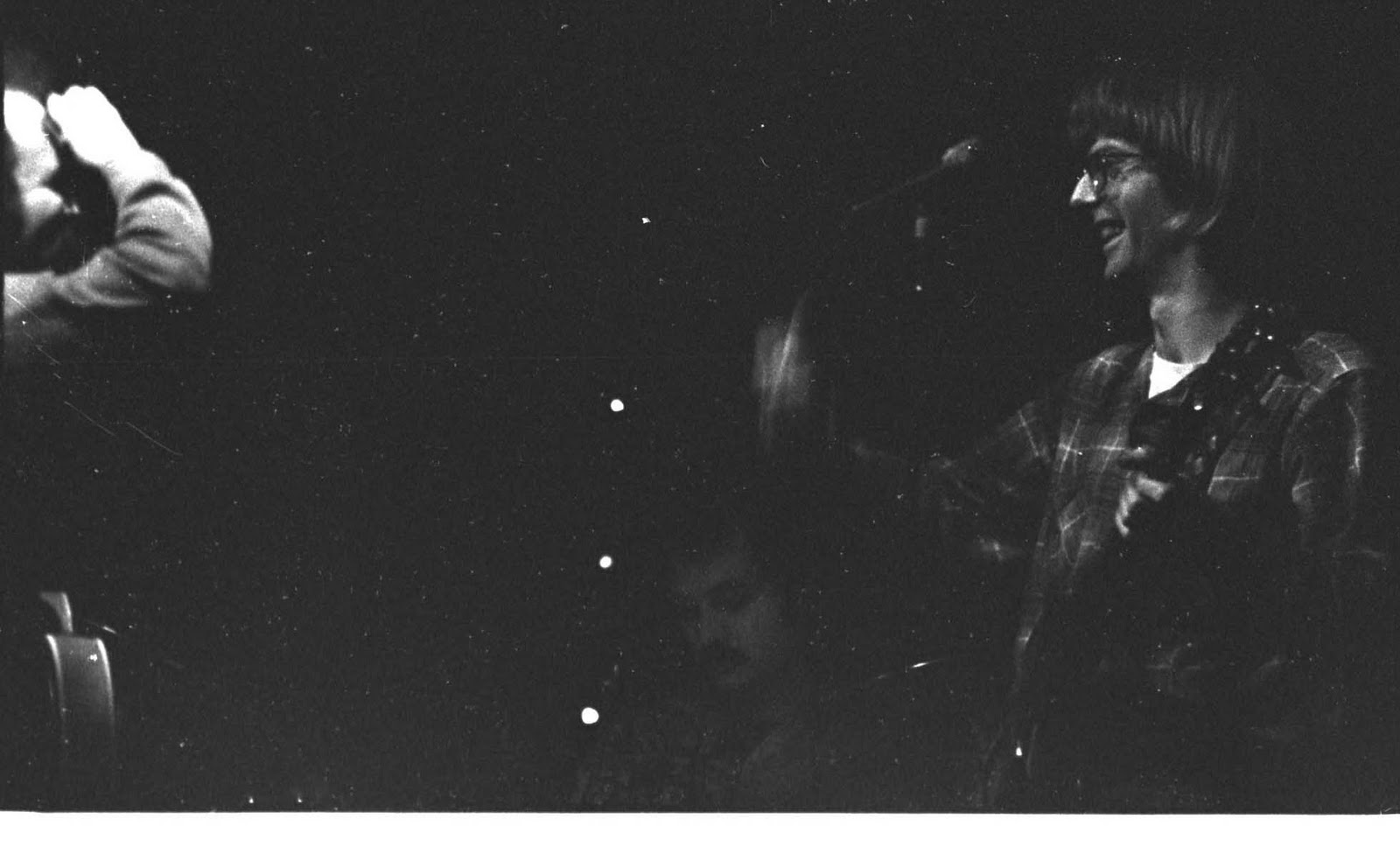
2/22/70 Delaney and Bonnie and Friends with Eric Clapton

By 1968, Eric Clapton was arguably one of the biggest stars in the music business, a fact reinforced by the fact that his bay area concerts had migrated from the Fillmore to Winterland and, then, for Cream’s Farewell tour in October and Blind Faith’s sole Northern California date the following August, to the cavernous Oakland Coliseum Arena. Thus, it was a great surprise when his next set of appearances, as a member of Delaney and Bonnie’s Friends, were back at the Fillmore West.

Although Clapton’s appearance at such a small venue was perhaps unexpected, the billing actually made sense. As has been extensively discussed in Clapton’s autobiography and elsewhere, he bonded with Delaney and Bonnie Bramlett when the duo were one of the opening acts on the Blind Faith tour. Clapton, disenchanted with the hype of his own ‘supergroup’ was charmed by the gospel/R&B inclinations and down-home hospitality of the Bramletts, and joined them, along with fellow luminaries George Harrison and Dave Mason, on the group’s European tour. That tour yielded a wonderful live disc,  simply titled On Tour (recently expanded to a 4 CD compilation by Rhino’s boutique label Handmade). On the heels of the release of the live album, Delaney and Bonnie, with Clapton in tow, set out for a tour of America that culminated with a four day run at the Fillmore West.

Although I was of driving age by then, I still had to con my brother into going to one of the shows with me, and we ended up going on the final (Sunday) show for some reason, along with his college roommate Dave. It turned out to be quite the adventure.

The booking for the shows included three opening acts – the New York Rock and Roll Ensemble, and Dutch rockers Golden Earring.

New York Rock and Roll Ensemble (Michael Kamen on Left)
Photo: M. Parrish
I had actually seen the New York Rock and Roll Ensemble at Stanford the previous year performing the music for the Joffrey Ballet’s pioneering rock ballet Astarte (an amazing and groundbreaking event in itself, but one I don’t feel qualified to write much about). The group’s forte was bringing classical embellishments into a rock context, and their performance at the Fillmore was solid, but does not bring back strong musical memories. In an interesting serendipity, the group’s keyboardist and principal composer, Michael Kamen, went on to have a very successful career as a composer of soundtracks, and collaborated occasionally with Clapton on projects, including the music for Lethal Weapon II. 

Golden Earring 2/22/70
Photo: M. Parrish
Golden Earring hailed from the Hague in Netherlands, and were already big stars in Europe when they came to the US for this support gig. The group’s onstage posturing and over the top volume and attack presaged the imminent rise of heavy metal, but they went on to have a global AM hit with “Radar Love” and remain a popular and active group in Europe today. They had recently gotten quite a bit of airplay with a 19 minute extrapolation of “Eight Miles High” and did not disappoint by performing an appropriately extended version at the Fillmore. Overall, their hard driving set was certainly memorable, and it was fun to watch them thrashing about.

Delaney Bramlett and Eric Clapton 2/22/70
Photo: M. Parrish
Although Harrison and Mason had not chosen to make the stateside trek with Delaney, Bonnie, and Eric, the lineup of their “Friends” at the time still consisted of a stage full of high caliber musicians who all went on to various fame, fortune (and in one case, misfortune). The stellar rhythm section of bassist Carl Radle and drummer Jim Gordon gave the group much of its propulsive drive. After this tour, they along with the band’s organist, Bobby Whitlock, went with Clapton to form Derek and the Dominoes. Radle went on to be Clapton’s bassist for many years, while Gordon played with Traffic, did tons of sessions. Unfortunately, he eventually succumbed to schizophrenia and was jailed after killing his mother.

Jim Price, Bobby Keys, Bonnie and Delaney Bramlett
Fillmore West 2/22/70 Photo: M. Parrish
The group’s horn section comprised saxophonist Bobby Keys and trumpeter Jim Price. Both were veterans of many rock and R&B tours, and knew just exactly when and how to use their instruments to pump up the group and the audience. After the breakup of this lineup of Delaney and Bonnie and Friends, they were recruited by the Rolling Stones, who also knew a thing or two about getting a crowd on its feet. You can read much about Keys’ legendary exploits in Keith Richards’ autobiography, and Keys is still the group’s first call sax player when they tour. Price keeps a lower profile, doing mostly composition and session work.  An Internet search fails to locate any mention of conga player Tex Johnson after the D&B tour.

Vocal support was provided by Rita Coolidge, who went on to be part of Joe Cocker’s Mad Dogs and Englishmen troupe before launching a successful solo career. Guesting on piano, possibly just for that one night, was pianist Leon Russell, who at the time was between the successful launch of his first solo album and the role he played as bandleader and mastermind behind the aforementioned Mad Dogs and Englishmen tour later that year.

Bonnie and Delaney Bramlett, Eric Clapton
2/22/70 Photo: M. Parrish
The On Tour album had been released a few weeks before the Fillmore West shows, so the capacity audience knew that Clapton’s role would be principally as lead guitarist and occasional lead vocalist, so there was none of the angry heckling or calls for Cream tunes that had characterized some of the troupe’s earlier UK shows. The repertoire for the night was mostly drawn from the album, with a few other covers and the odd original thrown in.  With Delaney Bramlett and Clapton the sole guitarists, the sound was leaner than it had been on the European tour where three and sometimes four guitarists tried to avoid musical collisions.

The Bramletts wrote some strong tunes singly, as a duo, and with collaborators like Clapton, Russell, and Whitlock, who wrote the powerful, "Where There’s a Will, There’s a Way" with Bonnie.  At the show I saw, this tune was stretched out with a rousing gospel tinged coda that featured some rousing harmonies between Whitlock and the Bramletts. Clapton sang two songs, the slow, soulful “I Don’t Know Why,” which he wrote with Bonnie, and Robert Johnson’s “Crossroads,” rendered much slower and funkier than the frenetic versions he played with Cream. Johnson was toasted directly  with the slow, Memphis tinged Bramlett-Russell medley dedicated to the late bluesman, with Clapton contributing some stinging leads (this medley has recently been revived by the Chris Robinson Brotherhood, the Black Crowes leader’s jam-heavy side project). The set-closer was the Clapton-Bramlett showpiece “Coming Home,” which was built on one of the guitarist’s dramatic, arpeggiated riffs.  Brought back for the inevitable encore, the group ripped things up with a Little Richard Medley of "Tutti Frutti," "The Girl Can’t Help It," "Long Tall Sally," and "Jenny, Jenny."

With the concert finished close to 2 AM, our evening turned out to be just getting started. The three of us returned to our parent’s car, a big cream colored Chevy Impala, to find one of the rear tires had gone flat. Maybe an hour later, we had changed the tire, only to find out that the spare was also flat. Fortunately, there was an all night gas station at the corner of Mission and Van Ness that was able to fix the flat. While we were waiting for them to get to the repair,  the station was visited by an inebriated fellow who attempted to hold up the station by brandishing a knife. Nonplussed, one of the two gas station attendants smoothly relieved him of the knife and, I believe, sent him on his way without calling the authorities. This may have been business as usual for a gas station south of Market, but it was quite a drama for us kids from the suburbs. The sun was just coming up when the tire was back on the car, just in time for my father, who my brother had called after the spare proved to be flat, drove up in his Austin Healy Sprite.  He didn’t seem to mind having gotten up in the middle of the night for nothing, but I think he wished he at least could have heard the concert.

Monday, September 5, 2011

Pepperland Revisited (Again)

Former Pepperland building from the West
Photos: M. Parrish 7/11


Roof of Pepperland building - note relatively intricate wooden bracing
Thanks to the guidance of an anonymous commentator who worked at Pepperland, I was corrected in my assertion that the building with the Litchfield’s sign in front of the Bermuda Palms hotel was the space that housed Pepperland. Although that building was the home of the Bermuda Palms, the Citadel, and possibly Euphoria, Pepperland itself was a marginally bigger Quontset Hut type building immediately north of the Litchfield’s building. Today it houses Marin Hydroponics, and is indeed considerably changed from its concert configuration in the 1970s. I made a second road trip to the Litchfield Compound in early July, and was given a tour of the former Pepperland building by Al, the very helpful proprietor of the current establishment, who was well acquainted with the building’s storied history, and still rents the property from the Litchfield family. I have to admit that this correction of venue was a relief to me, as the building, sans the bay window in front and the addition on the southern end, was much more recognizably like the structure I remembered from its days as a concert venue. Although the promoters could have probably squeezed 1000 people into the building if the fire marshall wasn’t looking, it was still a good deal smaller than any of the SF ballrooms. One of the notable features of the building is the curved wooden roof, a much more elegant structure than the typical Quontset huts roofed with aluminum sheets (like Sophie's/Keystone Palo Alto on the Peninsula, which I will get around to eventually).

These days, the former concert floor is cut in half by the service counter and a longitudinal wall that splits the east and west halves of the building. Al let me peek in the storeroom area where the stage had been, but it was pretty piled with various kinds of merchandise. I’m no expert on hydroponics, but it appears to be a well-stocked place with a knowledgeable staff and a premier rock and roll pedigree. If you drop by, tell ‘em you read about it here!
Front of the former Pepperland Building from the Southwest 7/11

Pepperland building from the South- side view


Monday, June 27, 2011

Miles Davis and the Dead 4/10/70

The next round of shows the Grateful Dead played at the Fillmore West represented one of Bill Graham’s most legendary bookings, the inspired pairing of the band with Miles Davis’ electric band. At the time, Davis was at somewhat of an artistic and commercial crossroads. After a few years of touring with an acoustic quintet that had comprised pianist Herbie Hancock, saxophonist Wayne Shorter,  bassist Ron Carter, and drummer Tony Williams. During 1968-70, this group gradually unraveled as Carter, Williams, Hancock, and Shorter left one by one to pursue their own careers.  Davis was also gradually moving into an electric band configuration in performance, amplifying his trumpet and utilizing electric keyboards and bass. On his two 1969 albums,  Filles de Killiminjaro and In a Silent Way, Davis had started incorporating musicians like bassist Dave Holland, keyboardist Chick Corea, and guitarists George Benson and John McLaughlin and had moved from fairly conventional compositions into pieces that were more open ended, evoking a mood or a groove rather than the more traditional construct of stating a theme, following it with a series of solos, and resolving back to the theme at the end.

Miles Davis and Band Fillmore West 4/10/70
L-R (Airto, Dave Holland, Miles, Chick Corea)
Photo: M. Parrish
Davis’ Fillmore West dates came close on the heels of the release of his groundbreaking double LP Bitches Brew, which represented another big artistic leap for the trumpeter. Aggressive and dominated by rock rhythms and electric instruments, the album became Davis’ best seller and brought him before young, white audiences in a way his earlier work had not.  The band that Davis brought into the Fillmore West, comprising Corea, Holland, soprano sax player Steve Grossman, drummer Jack Dejohnette , and percussionist Airto Moreira, was fully versed in this new music, and stood the Fillmore West audiences on their ears. Davis described this in his 1989 autobiography (p. 302):

“After Bitches Brew,  Clive Davis put me in touch with Bill Graham, who owned the Fillmore in San Francisco and the Fillmore East in downtown  New York. Bill wanted me to play San Francisco first, with the Grateful Dead, and so we did. That was an eye-opening concert for me, because there were about five thousand people there that night, mostly young, white hippies, and they hadn’t hardly heard of me if they had heard of me at all. We opened for the Grateful Dead, but another group came on before us. The place was packed with these real spacy, high white people, and when we first started playing, people were walking around and talking. But after a while, they all got quiet and really got into the music. I played a little of something like Sketches in Spain and then we went into the Bitches Brew shit and that really blew them out. After that concert, every time I would play out there in San Francisco, a lot of young white people showed up at the gigs.”

Davis had actually played for Graham a few weeks before at the Fillmore East,  on a bill with Neil Young and Crazy Horse and headliner Steve Miller. Davis discusses his lack of enchantment with Miller and his music in his autobiography (p. 301), and he risked Bill Graham’s ire by showing up late every night so he got to close out each show. 

Davis had a much better rapport with the Dead, and particularly Jerry Garcia (P. 302):

Jerry Garcia 4/10/70
Photo: M. Parrish
“..it was through Bill that I met the Grateful Dead. Jerry Garcia, their guitar player, and I hit it off great, talking about music – what they liked and what I liked- and I think we all learned something. Jerry Garcia loved jazz, and I found out that he loved my music and had been listening to it for a long time. He loved other jazz musicians, like Ornette Coleman and Bill Evans. “

In Dennis McNally’s Dead history A Long Strange Trip (p; 366), he discussed the impact Davis had on Garcia:  “Years later, Garcia would say he learned from Davis’ music the concept of ‘open playing. I got part of that from Miles, especially the silences. Nobody plays better holes than Miles, from a musician’s point of view,  anyway. In Indian music they have what you call  the ‘unstruck,’ which is the note you don’t play. This has as much value as the stuff you do play.’”

Playing with Davis had a profound impact on all the members of the Dead. Phil Lesh discussed his own reaction in his autobiography, Searching for the Sound (pp. 177-78):

Phil Lesh and Bob Weir 4/10/70
Photo: M. Parrish
“..we played a four night stand at the Fillmore West, where we re faced with the unenviable task of following the great Miles Davis and his most recent band, a hot young aggregation that had just recorded the seminal classic Bitches Brew. As I listened, leaning over the amps with my jaw hanging agape,  trying to comprehend the forces that Miles was unleashing onstage, I was thinking What’s the use. How can we possibly play after this? We should just go home and try to digest this unbelievable shit.  This was our first encounter with Miles’ new direction. Bitches Brew had only just been released,  but I know I hadn’t yet heard any of it. With this band, Miles literally invented fusion music. In some ways it was similar to what we were trying to do in our free jamming, but ever so much more dense with ideas – and seemingly controlled with an iron fist, even at its most alarmingly intense moments. Of all of us, only Jerry had the nerve to go back and meet Miles, with whom he struck up a warm  conversation. Miles was surprised and delighted to know that we knew and loved his music, apparently other rockers he had shared it with didn’t know or care.”

McNally (p.365) also described the reaction of the Dead’s two percussionists: ‘Totally embarrassed’ to be asked to follow,  Kreutzmann recalled that ‘we played really free, loose’ afterward ‘but I couldn’t get Miles out of my ears.” Mickey Hart’s strongest reaction was understandably to percussionist Moriera, who he characterized accurately as “crawling around on the floor foraging for instruments.”

Prior to the announcement of these historic shows, I had picked up Bitches Brew on the day of its release. My dad had bought In A Silent Way the previous year, and I was entranced by its modal tranquility and the layering of acoustic and electric instruments.  As anyone who has heard it knows, Brew is a different beast entirely- aggressive, more open-ended, and stretched generously over two LPs. The cover was equally striking, with its brightly colored and mysterious painted collage with African themes.  After repeated playings, I was still trying to digest what Miles had wrought on these discs when the word came out of the Miles/Dead pairing. I knew that I had to get to one of the shows.

As had became somewhat habitual,  I ended up going on Friday night, this time with my brother and my dad. As Davis described in his autobiography, the Fillmore West was pretty full, and populated by the customary urban/suburban, primarily Caucasian audience. The poster listed a four act roster, but I have no memory of Scottish progressive rockers Clouds playing. I do remember well the set by the other Scottish group listed on the poster, Glasgowegians Stone the Crows. Their stock in trade was the heavy blues so popular in the UK at the time, and featured the remarkable vocals of Maggie Bell, who elicited apt and favorable comparisons to Janis Joplin at the time. 

Steve Grossman, Dave Holland, Miles
Photo: M. Parrish
As was billed on the poster, Miles’ group came on next, with the Dead closing out each of the four nights. Davis had run afoul of Bill Graham during his Fillmore East run in March, where he showed up late enough each night that  billed headliner Steve Miller had to play first, with Miles’ group closing out the night. Either some agreement with Graham or Miles’ rapport with the Dead resulted in him showing on time for the Fillmore shows. I do not remember a particularly long break between Stone the Crows and Davis, but the mood in the hall shifted dramatically from a mundane Friday at the Fillmore to deepest Africa when Davis and his band took the stage and started playing.  On the darkened stage, Davis stood front and center. He played more at these shows than he did later in his career, and faced the audience although, in typical Davis fashion, barely acknowledging their presence.  Davis’ attack was muscular and direct, but he had not as of yet adopted many of the electronic effects that would characterize his sound during the 1970s. Sharing the front stage with Davis was relatively new recruit Steve Grossman, whose piercing explorations on alto saxophone were an essential component of Davis’ “Fillmore” bands.

Much of the textural color of the music came from the electric Fender Rhodes piano of Corea, who had been with Davis since Herbie Hancock left in the summer of 1968.  Holland, at Davis’ bequest, had temporarily abandoned his trademark standup bass for a Fender electric, and kept the pulse of the music flowing organically in tandem with the sturdy drumming of DeJohnette.  Relatively new to mainstream jazz at the time, Holland has developed into one of the idiom’s best respected and most creative bandleaders and composers.

Airto, Dave Holland, Miles, Chick Corea
4/10/70. Photo: M. Parrish
Like Mickey Hart, I was drawn to Moreira during the band’s set. The percussionist indeed was seated on the floor, and had at hand an arsenal of exotic hand percussion instruments that he rattled, squeaked, and shook to produce a mélange of exotic sounds. For the time, the hirsute and methodical Moreira’s percussion was several notches in strangeness above the weirdest stuff that Hart was able to generate in the Dead at the time, and it was no surprise that the two have ended up collaborating on percussion adventures throughout their subsequent careers.

Miles’ sets drew heavily from the just released Bitches Brew (“Miles Runs the Voodoo Down,” “Bitches Brew,” “Spanish Key,” and “Sanctuary”) along with bits of In A Silent Way (“It’s About That Time”), some as yet unreleased tunes (“Directions,” “Willie Nelson”), a snippet of the ballad “I Fall In Love Too Easily” and Davis’ regular closing coda (“The Theme”)  all stitched together into one uninterrupted set.

Davis’ remarkable Friday evening set has been known to tape collectors since shortly after the show.  A soundboard recording of the show was broadcast on Berkeley radio station KPFA shortly after the shows. Much later,  an edited version of the show was released by Sony in Japan, and later in the states, as the album Black Beauty.  In addition to this release, soundboard recordings of the other three nights circulate among Miles aficionados, giving a full perspective on Davis’ repertoire at the time (Ironically, the notoriously well archived Dead’s own performances from the run are much more incomplete, with only the Sunday night set known as a complete soundboard recording).

Garcia, Lesh, Weir, and Pigpen 4/10/70
Photo: M. Parrish
When the Dead finally came on, it was close to midnight, and the audience had been somewhat pummeled into submission by Davis’ powerful juju. As has been their wont since, the Dead built the intensity of their set slowly, staring out with short tunes: “Cold Rain and Snow,” “New Speedway Boogie” and “Mama Tried.” After the reliable “China Cat Sunflower> I Know You Rider medley,  Pigpen stepped out front for a dynamic version of “Hard To Handle,” followed by “Casey Jones.”

At that point in the set, the Dead’s equipment crew were called on to rearrange the stage, setting up microphones adjacent to two folding chairs that Garcia and Weir used for a brief acoustic set. The Dead were no strangers to acoustic music, having bluegrass, folk, and jug band backgrounds, and the group had launched many of their late sets the previous year starting with acoustic guitars, shifting over to electric after a pair of subdued tunes, usually Dupree’s Diamond Blues and “Mountains of the Moon.” The first acoustic mini-sets took place at the end of 1969, once at the old Fillmore and once in Dallas, when one or more band members were late to the shows.  In January, the band did the bulk of a show acoustically in New Orleans when they experienced equipment failure, and they started introducing pre-meditated acoustic sets at the band’s legendary mid-February run at the Fillmore East.

Bob Weir and Jerry Garcia 4/10/70
Photo: M. Parrish
For the acoustic set I saw, the two guitarists were accompanied by Lesh on very subdued electric bass and Mickey Hart on drums. They played half a dozen songs – new pieces like “Candyman” and “Friend of the Devil” bound for American Beauty,  the Workingman’s Dead songs “Black Peter” and Uncle John’s Band,” and old standby “Deep Elum Blues.” The biggest surprise was an upbeat but ragged cover of the Everly Brothers tune “Wake Up Little Suzie.” The acoustic sets would be expanded and refined throughout the year, but there was nothing like seeing one for the first time.

Pigpen 4/10/70
Photo: M. Parrish
After more equipment rearrangement, the second electric segment began with Pigpen’s soulful rendition of the James Brown chestnut “It’s a Man’s World,” which proved to be a perfect vehicle for the group to stretch out. Newly added to the repertoire for this run, the band apparently played it each of the four nights. Sadly, the song’s tenure in the band was brief, with its last appearance at the group’s September stand at the Fillmore East.  They continued with another song that allowed for open-ended playing, a long, upbeat rendition of “Dancin’ in the Streets.” At the end of another Workingman’s Dead tune, “High Time,” the official curfew time of 2 AM was approaching. Without skipping a beat, the Dead entered into the longest, most intense version of the “Alligator>Caution” medley I ever heard. As Garcia,  Lesh, and Weir explored the tricky improvisational waters, they appeared to be finally digesting the lessons that Davis’s band had posed to them earlier. Playing on and on, the band thumbed their collective noses at the Fillmore curfew. Unfortunately, I encountered a curfew of my own, as I was literally dragged from the floor of the Fillmore out onto Market just as the band was exploring the “We Big You Goodnight” theme instrumentally, much as they did later in the “Not Fade Away”/”Goin’ Down the Road Feelin’ Bad” sandwich. I learned later from another attendee that the band reached the vocal portion of “We Bid You Goodnight” after another quarter hour or so.

Miles and the Dead. A pairing for the ages. Sadly, the Fillmore West run was the only time the two shared a stage. God Bless Bill Graham…

Saturday, June 4, 2011

The Buffalo Springfield at the Fox Theatre, 6/1/11

Until this year, I had never spent over $100 for a regular, non-benefit concert ticket. However,  I decided to bite the bullet for the chance to see the first full show in 43 years by the reunited Buffalo Springfield in the intimate confines of Oakland’s Fox Theatre.

The beauty and coolness of this venue can’t be overstated.  Located  at the junction of Telegraph Avenue and Broadway in downtown  Oakland, the art-deco movie palace has been fully restored and is now booked for concerts by Another Planet Entertainment,  a group of former Bill Graham Presents employees that have set the gold standard for concert promotion in the Bay Area today.  All of the employees I have dealt with there are friendly, relaxed, and helpful, and it comes across as a welcoming venue rather than a place that crowds in as many people as it can without much regard to the comfort of the patrons.

The interior of the theatre is simply stunning, with a vaguely Arabic theme featuring two enormous gold idols with red eyes flanking the stage, which is flanked with intricate gold scrolling. With a capacity of 2800, the theatre is unusually intimate,  and it features such welcome amenities as truly comfortable seats,  a bar and restaurant downstairs, and an immaculate cleanliness and tidiness often missing from such vintage venues.

The show was opened, as will be the case throughout the brief Springfield tour, by the acoustic duo of Gillian Welch and David Rawlings. Their brief set alternated between Welch originals like “Time the Revelator” and traditional country blues tunes like “I’ll Fly Away” and “Make Me a Pallet on Your Floor.” The duo’s harmonies and Rawling’s athletic lead guitar went down very well with the crowd,  the bulk of whom (at least from my vantage point in the front of the mezzanine) appeared to be eligible for membership in the AARP.

The stage set for the show also deserves comment. Behind the amps was a huge edifice consisting of six columns that supported a large “Buffalo Springfield” sign flanked by two life size and vividly three-dimensional images of the steam roller that spawned the group’s name,. When the lights went down, the fields between the columns became a field of lights vividly mimicking a starry night.  Onstage, the group’s relatively modest amplifiers were joined by the cigar store Indian that has been a familiar fixture at Neil Young concerts over the years and a large Tiffany lamp that lit a vintage upright piano on stage left.

As noted earlier in this blog, I had a chance to see the reunited Springfield at last fall’s Bridge concerts. For that reason,  the edge might have been taken off of the anticipation I felt when Stephen Stills, Richie Furay, and Young bounced onstage together to kick off the show with “On The Way Home.” As thrilling as the Bridge sets were,  though, this show was an entirely different animal – the reunited group playing their first full show with electric instruments in  over four decades. As on the album version of the tune,  Furay, at center stage, took the lead vocal,  with Stills and Young providing sublime harmonies.
Stills took the lead on the next tune,  “Rock and Roll Woman,” with Furay and Young sharing a single microphone for the harmonies.  Stills’ performances have been hit or miss over the years, but he has not looked this good or played this well consistently since the 1970s. The formerly chubby guitarist is down to fighting weight and was sharply dressed in a black shirt and blazer.  Stills and Young always seem to bring out the best in one another instrumentally, and the pair played off one another brilliantly all night, most notably on a supercharged version of “Mr. Soul” late in the show. 

After a brisk run through another chestnut, “Burned,” Young welcomed the crowd, saying “We’re the Buffalo Springfield – we’re from the past.” Young served as the wisecracking emcee most of the night, later recalling Nixon secretary Rosemary Woods and wondering about the ’44 year gap” in the Springfield’s touring history. When he introduced “I Am a Child” he remarked on the cover of the last, posthumous Springfield album, which had him looking in the opposite direction of the other band members.  In response to that cover, which symbolized his defection from the group, he said, with evident regret,  “that was bad – we shouldn’t have done that – an error.”

The rhythm section,  comprising Young’s first call bassist Rick Rosas and long-time CSN drummer Joe Vitale, did a fine, unobtrusive job of keeping the tunes together.  Versions of some tunes, like “Hot Dusty Roads” were faithful to the recorded versions while others, notably a slow, grungy take of “Hot Dusty Roads” for which Young brought out his mainstay guitar,  the hot-rodded Les Paul known as Old Black.  For the letter-perfect version of Furay’s soft ballad “Kind Woman,” Young  churned out some honky tonk licks on the upright piano.

At one point, Young cracked, “We only know 10 songs,” but actually they played eighteen over the span of an hour and a half. Late in the show, the group dipped into its back catalogue for a few obscurities, including Furay’s “My Kind of Love,” which remained unreleased until the 2001 box set, and a slow, simmering version of Stills’ Everybody’s Wrong” from the first Springfield album.  The set wrapped up with the inevitable “Bluebird,”given a sparkling new arrangement and providing fodder for some more guitar pyrotechnics.  After a group stage bow, the group left the stage, Young’s arm slung companionably around Stills’ shoulder. 

The three song encore offered more surprises, starting with what is probably the first live version of Young’s cinematic “Broken Arrow,” with Stills playing piano and Young softly playing the clarinet coda from the album on guitar. “For What Its Worth” has not always been delivered well live, but Stills nailed it this time. The night ended with the only song not from the Springfield canon per se, an over –the-top version of “Rocking in the Free World” with soaring three part harmonies and Young and Stills alternating lead vocals.

At the end of the day, the show offered pretty much everything a Springfield fan might want out of a show. Clearly Stills, Young, and Furay seem to be enjoying one another’s company, and the acid test will be whether they choose to extend the franchise into the twenty first century by producing new material. Whether they do or not, these reunion shows should make a powerful case for the Springfield being one of the best bands to have emerged in the 1960s. 

Saturday, May 14, 2011

February 1970 - Two Nights with the Grateful Dead


Everyone who followed the Grateful Dead has their favorite year or two. Some people favor the raw, early psychedelia of 1968 and 1969. Others like the Brent years,  the Bruce and Vince era,  and almost everyone likes 1972.  My favorite Dead year, hands down,  is 1970, and I consider myself very fortunate to have gotten to see the band’s evolution that year through five shows from four different runs at the Fillmore West.

It was definitely a transitional year, starting with the band smarting from the disaster of Altamont, the loss of many months of income when manager Lenny Hart absconded with their operating capital.  In January, the band began what was arguably their heaviest year of touring with an east coast swing, a junket out to Hawaii, and an ill-fated three-night stand at New Orlean’s warehouse,  during which the group experienced their storied bust at their hotel in the French Quarter.  Keyboardist Tom Constanten elected to exit the group during the Hawaii junket, playing his last gigs with the group in New Orleans. Emotionally and financially bruised, the band retreated to San Francisco to regroup and begin recording their next album, Workingman’s Dead. A combination of financial necessity and the nature of the new material meant that the album was cut quickly and simply, a marked contrast to the extravagant  experimentations of their previous two studio albums, Aoxomoxoa and Anthem of the Sun.  With new road manager Sam Cutler, the group also began rebuilding their finances through a grueling year of touring that found them playing 134 dates in 20 different states, plus gigs in the UK and Canada. This was also the year they cemented their dramatic fan base in New York,  playing 43 gigs in and around Manhattan.  They also played a record number of hometown  dates as well – at least 34 in the greater Bay Area.

The Dead also transitioned from a headlining act to an entire evening of entertainment as their shows expanded to include acoustic sets and Garcia’s side project with  John Dawson and David Nelson, the New Riders of the Purple Sage. Their expansive shows could run to five hours or more, incorporating folk, bluegrass and acoustic blues, the cosmic country of the NRPS, and the Dead’s ever expanding repertoire of originals and their unique takes on an arsenal of rock, country,R&B,  and blues tunes. The Dead arguably reached their compositional and recording peak with the two classic albums recorded that year - Workingman’s Dead and its successor, American Beauty, which introduced a rich and enduring set of new compositions into their repertoire

As the year drew to a close, Mickey Hart was poised to leave the group, and they somewhat abruptly morphed into what  Jerry Garcia described in a 1971 interview as a ‘a regular shoot-em-up saloon band.’ Anchored by single drummer Bill Kreutzmann’s remarkably fluid chops, they continued to thrive well into the seventies and beyond,  but the intimate magic of those 1970 ‘Evenings with the Grateful Dead’ would ever be created again.

The Dead’s first hometown run of 1970 was at Bill Graham’s Fillmore West, where they played their usual extended four-night weekend following an abbreviated set at the Family Dog on the Great Highway on Wednesday night as part of a Ralph Gleason-produced KQED TV Taping that was released years later as A Night at the Family Dog. As fate would have it, I ended up going to two of the four Fillmore West shows, through happenstance rather than by design. I went to the Friday show with my Dad (his first of about a dozen Dead shows), and was then invited to go to the Sunday night show with one of my high school friends and his father. Although it became commonplace for people to attend multiple Dead shows in later years, this was somewhat of a revelation for me, when it became apparent that the setlists of the two shows were almost entirely different (Although we take for granted the exhaustive chronicling of almost every Dead show today, such information was not readily available back then).

Bigfoot 2/8/70 Photo: M. Parrish
            For the February run, the Dead topped a bill rounded out by southern Californians – Taj Mahal’s electric blues band and jazz rock quintet Bigfoot. Bigfoot’s opening set was  vaguely psychedelic jazz rock (think the initial incarnation of Chicago Transit Authority). The quintet recorded a fine album on Winro Records before splitting. Some of the former members had some Grateful Dead connections. Keyboard/sax player Dave Garland was in one of the incarnations of Bob Weir’s side band Bobby and the Midnights, and guitarist/vocalist Art Munson (a multifaceted musician and producer who had worked with the Righteous Brothers before joining Bigfoot) sold many a blank DAT tape to Dead tape collectors in the 1980s and 1990s through his Cassette House. The group’s bassist, Virgil Beckham, went on to be an active participant in the Los Angeles Christian rock arena,  playing in Richie Furay’s early evangelical band as well as with many other ensembles. I remember them putting on fine shows both nights, but don’t remember any specifics.

Taj Mahal Band 2/8/70 - Jesse Ed Davis, Taj, and
Chuck "Brother"  Blackwell. Photo: M. Parrish
At the time of these shows, Taj Mahal had just recently released his double LP, Giant Step/De Old Folks at Home, and was touring with a phenomenal band that included guitarist Jesse Ed Davis,  bassist Gary Gilmore, and drummer Chuck Blackwell.  At Friday night’s show, Taj came  out wearing an outfit very similar to that on the cover of that LP, with a broad brimmed hat,  kerchief around his neck, workshirt and jeans. His all-electric set drew almost entirely from Giant Step and his previous album, The Natch’l Blues, and went down very well indeed with the crowd.  Taj has always known  how to work an audience.  Davis was an amazing guitarist,  the rhythm section cooked,  and the overall chemistry of that band was as memorable as it was legendary. It’s a shame they didn’t stay together longer, but Taj seemed artistically restless during the early 1970s (and beyond, for that matter), trying out new bands and new sounds the way many people try on clothes.

Both nights, the Dead played a single, long electric set. I was able to hear most of Friday’s set,  but regrettably only the first hour or so of the long, powerful show they played on Sunday.  The Friday show featured all of the tunes that would appear on Workingman’s Dead except for the Pigpen showcase  “Easy Wind.” This was the first time I heard the Dead’s slow, funky remake of “Cold Rain and Snow” and their joyous, jammed out rendition of “Dancin’ In the Streets.” It was also a good night for Ron “Pigpen” Meckernan, who trotted out a ferocious version of “Hard to Handle” as well as a long version of the recently resurrected  Rascals chestnut“Good Lovin’” which was punctuated by a duel between Kreutzmann and Hart. Bob Weir’s cowboy persona was starting to fully flower at the time,  and these were the first of countless Weir renditions I was to hear over the years of John Phillips’ “Me and My Uncle” and Merle Haggard’s “Mama Tried.” Once again, the centerpiece of the set was a long segment built on “That’s It For the Other One” which resolved into one of the earliest airings of the poignant Garcia-Hunter ballad “Black Peter.” We exited the house during that song, which meant that I once again missed the opportunity to see Pig strut his stuff for the concluding "Turn on Your Lovelight."

Sunday afternoon, I got a call from my friend Brooks that he and his dad were going up to the Fillmore, and asking if I wanted to go. Although I had not done so on Friday, I grabbed my camera and off we went.  Given that it was a Sunday night, the crowd was lighter than it had been on Friday, so we stationed ourselves along the raised walkway to the right of the stage, which afforded a somewhat better view than the middle of the floor (However, one of the real benefits of the Fillmore West was that the sightlines were great everywhere).

Taj Mahal 2/8/70 Photo: M. Parrish
As I remember, the Bigfoot and Taj Mahal sets were pretty similar to those on Friday. For his Sunday show,  Taj wore a very stylish African outfit, which I am ill versed to properly characterize,  (but is visible in the photos I took that evening).

With the Dead onstage tuning up, I made my way down right opposite the PA speakers on stage left, just a few feet from the band. As has been documented widely elsewhere,  Bill Graham enjoyed a complex love-hate relationship with the Dead, and both took the opportunity to bait the other whenever  possible. To begin his introduction of the group, Graham presented Jerry Garcia with a framed photo of celebrity-of-the-moment Michael J. Brody, who had received headlines earlier in the week for giving much of his fortune away to various charities. Presumably Graham thought that Brody’s largesse might benefit the currently financially-strapped band and, although aspiring musician Brody got both a recording contract with RCA and an appearance on the Ed Sullivan show,  he did not emerge as a benefactor for the Dead (and that was probably a good thing!). 

Smokestack Lightnin' -Bob Weir and Pigpen
2/8/70. Photo: M. Parrish
On a roll, Graham needled the beleagured band further with his introduction: “Stars of stage, screen, and radio, fresh from a command performance in New Orleans,  these are the Grateful Dead.” It was common for the Dead to build their sets slowly, starting out with something gentle like “Cumberland Blues” two nights before. It was often the hallmark of a really good night for the band when they began by pulling out all the stops, and that is just what  they did Sunday night, jumping into a gritty, fifteen minute rendition of the seldom played Howlin’ Wolf field holler, “Smokestack Lightning.” As is often the case in the best Grateful Dead performances, the pace is set by Phil Lesh, whose loping bass lines drive the band along. Lead instrumental duties alternated between Garcia’s stinging lead guitar and Mckernan’s fluid harmonica playing. Near the ten minute mark, Garcia and Weir started trading licks back and forth as Pig briefly sat down at the organ before stepping back out front to sing the last verse.

Jerry Garcia and Bob Weir 2/8/70
Photo: M. Parrish
Since 1967, one of the Dead’s most effective numbers was their version of Bonnie Dobson’s anti-war ballad “Morning Dew.” Usually reserved for deep in the band’s set, that evening they chose to pull it out as a solution to how to follow up the dramatic standard set by the opening tune.  Like “Smokestack,” the Dead played “Morning Dew” sparingly, and the versions they did around 1970 were particularly moving and majestic.  At the time, Jerry Garcia’s voice still had a delicacy and vulnerability, and Pigpen’s unadorned organ support was a perfect foil for Garcia’s equally emotive singing and lead guitar.
Two songs and a half hour into the set, the Dead toned things down somewhat with the first Workingman’s tune of the evening, Garcia’s dark folk tune “Dire Wolf.” Although Garcia’s pedal steel was onstage both nights, and he played it on Weir-sung tunes at both the Thursday and Saturday shows,  he stuck to his electric guitar here both on “Wolf” and Weir’s peppy run through “Me and My Uncle.” Unfortunately, the calls of Monday morning school and work meant that we left during this tune, with the bulk of the Dead’s set remaining to be played. Fortunately,  tapes of this show circulate (and can be heard at archive.org),  so I was at least able to hear recordings of the rest of the show years later.
Bob Weir Fillmore West 2/8/70
Photo: M. Parrish

Continuing in short tune mode, the band cruised through a peppy version of another relative rarity – their version of the old bluegrass standard “Sitting On Top of the World.” They retreated to familiar ground with the reliable pairing of “China Cat Sunflower” and “I Know You Rider.” Next up was another rarity, a slow, soulful version of the Elmore James blues lament “It Hurts Me Too,” sung with gusto by McKernan.  Well past 1 AM,  the Dead launched into the heart of their set – a seventy five minute segment that strung together a long, exploratory Dark Star,  Saint Stephen (with Buddy Holly’s “Not Fade Away” sandwiched in the middle), and another long set-capping version of “Lovelight.” Although the best known Dead shows of this era were those from the Fillmore East the next weekend, released on Bear’s Choice and Dick’s Picks Volume 4, I think that the February 8 show is at least as good, if not better, than those shows.  I wish I could’ve stuck around for all of it. 

Sunday, February 27, 2011

Pepperland - then and now

The music hall called Pepperland is somewhat of a legend in Marin County lore. Although it was open, on and off, for less than three years, and fully operational for less than a year, it played host to a pretty amazing and diverse roster of international talent, including Pink Floyd, Captain Beefheart, Chuck Berry, and many others.  I got up to Pepperland two times, once to see what was billed as the Acoustic Grateful Dead and another time to see a dynamite quadruple bill of Grootna, Lamb,  Boz Scaggs, and Taj Mahal’s tuba band.  Pepperland has been discussed recently on a couple of the Bay Area related music blogs, so I thought I would deviate again from a chronological diary of shows to talk about this funky little venue.

Bermuda Palms 1950s? Image courtesy of Rebecca David.
(Check out her great book, Mid-Century By the Bay
calmodbooks.com)
The Aliens performing at Bermuda Palms, early 1960s. This is clearly the same stage setup used when the hall became Pepperland. 
Pepperland had its origins as part of a motel/restaurant complex called the Bermuda Palms which was built in the 1930s by a San Rafael builder/entrepreneur named Whitey Litchfield.  Located in downtown  San Rafael at 737 E. Francisco Blvd., just off of Highway 101, the club was readily accessible from Sonoma, San Francisco, and the East Bay, yet it was far enough away from those centers to have a distinctly laid-back Marin County vibe.

Poster from the Janis/Big Brother/Gold Hell's Angel's
Party 5/21/70
The layout of the Palms is shown nicely in the 1967 postcard shown above (the cars in the parking lot suggest that the picture was taken much earlier). The ballroom, adorned with the large Litchfield's sign, was located on the front of the property and the W-shaped motel was behind the hall and between Francisco Blvd. and Front Street. A photo taken at an Aliens gig in shows what the hall looked like in the mid-1960s (read more about the Aliens here). A Bermuda Palms poster shows a bill featuring the Sons of Champlin, as does the poster for the infamous Hell’s Angel’s party in the club on May 22, 1970 featuring Janis Joplin and Full Tilt Boogie, Big Brother, and Gold (admission $1!) still had the site identified as the Palms.

By late June of 1970,  the dance hall at Litchfield’s was renamed  Euphoria, and had a brief, but storied,  stint that included gigs by Big Brother as well as two nights featuring the Grateful Dead, the New Riders, and Rubber Duck. David Crosby participated in the Dead’s acoustic set the first night and, at the second,  Janjs Joplin appeared again to trade boozy sexual innuendos with Pigpen on “Lovelight.”

The Glyph sound system at Pepperland circa 1970-71


At the end of July, the club closed its doors while it underwent an extensive facelift, emerging in mid September as Pepperland, a Beatles-themed hall that featured a quadraphonic sound system that was one of the earliest projects for sound engineer John Meyer, who  later founded Meyer Sound, the East Bay company that started out building custom PA systems for the Dead and others, and has developed into one of the world’s premier sound reinforcement developers and manufacturers.

To complement the psychedelic décor, the support girders for the hall’s roof were adorned with painted portholes that mimicked the designs present in the fanciful craft piloted by the Beatles in their 1968 cartoon movie Yellow Submarine.  Even the sound system blended into the décor, with the speakers molded into huge conical fiberglass structures as shown above.What appears to have been Pepperland’s grand opening featured an eclectic triple bill of Hot Tuna, Captain Beefheart’s Magic Band, and jazz flute maestro Charles Lloyd. From then well into 1971, the club offered really interesting triple bills of acts that would normally be Bill Graham’s stock in trade in the city. Notable among these was a legendary Pink Floyd gig in which the band needed to use the ballroom floor to accommodate  all of their gear, and one of the shows was plagued by power failures as Floyd’s massive sound system taxed the club’s electrical capacity.  The relatively Pepperland portion of the gig list below was culled largely from the web site of Universalightforms, a site run by Bob Pulum, founder of legendary light show crew the Brotherhood of Light, who became the house visual artists at the club beginning with the club’s second gig with Frank Zappa and the Mothers.  According to Pulum’s site,  Pepperland’s first incarnation lasted from that initial show until an April 11, 1971 bill with Quicksilver,  Hot Tuna, and Lizard, after which the promoters allegedly split with the proceeds of that show.  Pepperland reopened in September with some of the original employees, including the BOL, in place, but the new venue seems to have only stayed open a few months, closing for good in January, 1972.  A nice selection of poster images from Pepperland and Euphoria can be found in this page at the great Chicken on a Unicycle web site.

The Litchfield’s motel appears to have been open during this entire time and developed somewhat of a shady reputation in the 1970s. This reputation is supported indirectly by the Grateful Dead tune "Shakedown Street," which was written  in 1978 about the neighborhood surrounding the band’s Front Street studios, which were directly across the street from the rear of the Litchfield’s complex.

Today the site houses a somewhat gentrified Motel 6. In front of the motel is a large building that recently housed the Zebra sofa store, and which was clearly the original Euphoria/Pepperland building. In 2008, the historic Litchfield’s sign was restored on the building through the efforts of Perry Litchfield, Marin County lawyer and Whitey’s son.

Jerry Garcia and David Crosby
Pepperland 12/21/70 Photo: M. Parrish
When I visited Pepperland in 1970 and 1971, it seemed like quite a trek up to the wilds of Marin from Palo Alto, but at least the hall was easy to find once in San Rafael,  located as it was on a frontage road right off of 101. What was immediately impressive about the hall was its modest size. Although it competed directly with the Fillmore West for headliners, Pepperland seemed to have been, by the most generous estimate, no more than half the size of the F. West/Carousel, which was already relatively tiny by today’s concert hall standards. As you can see from the photos, it had less-than-optimum dimensions for a music hall, a long, low building with exposed horizontal girders supporting the wide A-framed roof.  In its Pepperland makeover, these became girders of the enormous submarine one was supposedly inside within the hall. An interesting concept, but not an entirely convincing fantasy.  However,  combined with the exotic Meyer sound sculptures and the light show (it appears that none was operational at the 1970 gig, but Brotherhood of Light was very evident at the Mahal show) made for a fairly exotic interior setting, particularly when contrasted with the utilitarian trappings that surrounded the building.

George Marsh and Jerry Hahn Pepperland 12/21/70
Photo : M. Parrish
The 12/21/70 concert has been written about at length elsewhere, most recently in a lengthy blog post by Jerry Garcia’s Middle Finger. The photos I took at this gig are truly terrible as I was unable to adjust for the very low light conditions, but I was able to adjust the images using photoshop, and share a few of them here to give a bit of visual record from the event. These first two images just came to light a few weeks ago when I found a fragment of negatives from the first part of this show. What proved to be a marathon evening of music got underway with a spectacular set by the Jerry Hahn Brotherhood, one of the Bay Area’s most amazing, but generally unheralded, musical aggregations of the era. The group, comprising jazz guitarist Hahn, blues-rock keyboardist and vocalist Michael Finnegan, and the superb rhythm section of drummer George Marsh and bassist Mel Graves, had a relatively short lifespan, disbanding soon after the show I attended. Rocking hard, armed with a splendid set of songs mostly penned by non-member Lane Tietgen, this short lived quartet was very much akin to a Bay Area version of The Band.  They did release one fabulous, eponymous album on Columbia, but never achieved the popularity they richly deserved. This was the only time I got to see them, and I believe the group broke up shortly thereafter. I will write much more about this great group at a later date.

Mystery Musicians Pepperland 12/21/70
Photo: M. Parrish
What happened next is not entirely clear. I know that John Kahn played an unbilled set as (I believe) just a duo with a blues guitarist whose name I do not remember (none of the usual suspects like Bloomfield. Gravenites, Bishop, or the like) but I seem to have no photo record of this set. On the other hand, I do have this enigmatic photo of a jazz guitarist and drummer that was positioned chronologically on the film between shots of Hahn and the New Riders. As noted in the jgmf post and the attached poster, Howard Wales was billed in the advance posters. In a response to jgmf, I indicated that Wales had not played, but it is conceivable that he did play and I did not remember it. It was a very long evening of music, and an additional set by Wales and company would perhaps get the headliners coming on as late as they in fact did appear. What I believe I expected was for Garcia to play with Wales, which did not happen. At the time, seeing Wales himself would have been no big deal, as I had seen him a number of times with A.B. Skhy. So either this photo is of the guys who played with Kahn or perhaps part of Wales' band. Neither of the more familiar musicians are visible, so this is likely to remain a mystery unless more information is forthcoming. The guitarist looks somewhat like Terry Haggerty, but I am pretty confident that it is someone else.

Spencer Dryden and David Nelson of NRPS
Pepperland 12/21/70 Photo: M. Parrish
After Kahn and friend(s) came the New Riders of the Purple Sage. I'd seen them many times in 1970, but this was the first time I had seen them with Spencer Dryden on the drum kit instead of Mickey Hart. They played a nice long set, with no real surprises except for the switch in drummers, and finished up well after 1 AM.

Jerry Garcia's nose and David Crosby
Note: Garcia playing an SG and Crosby a Gretsch 6 String
Pepperland 12/21/70 Photo: M. Parrish
The headliners were billed as the "Acoustic Dead" but the group that took the stage was an impromptu quartet comprising Garcia, Lesh, Kreutzmann, and David Crosby. Two tapes of this ensemble (it remains an open question whether Mickey Hart substituted for Kreutzmann in the earlier gigs) from the Matrix a few days earlier (the exact date(s) of those tapes are debated) circulate widely, but their tenure was short lived, and this may have been the last time the quartet performed. I was only able to hear part of their set, which opened with "Alabama Bound" and also included "Deep Elum Blues," "Motherless Children" and "Triad." Clearly they played a lot more (which, based on the tapes from the Matrix show, would have included primal versions of "Bertha" and "Bird Song"), but at that point I was dragged out by my father, who had to go to work the next morning. As noted elsewhere, at least Weir and Pigpen could be seen wandering around backstage, so it is likely that the Dead did indeed play later.


There seemed to be nothing like a curfew at Pepperland, and the musicians were clearly in no hurry to get anywhere.

Crosby, Kreutzmann, Lesh Pepperland 12/21/70
Photo M. Parrish
An interesting question begged by this show's billing, as well as that for the 12/31/70 New Year's show, was the specific timing of the demise of the Dead's 1969-70 acoustic sets. Both of these shows advertised the Dead playing acoustically, but it appears that this did not come to pass at either gig. The last shows at which acoustic sets are verified are the 11/5-8/70 Capitol Theatre shows, and a plethora of subsequent November (11/16, 11/20, 11/29) and December (12/12, 12/26-28, 31) shows are known that do not include acoustic sets. The reasoning for the abandonment of these sets is unclear. The amplification of the acoustic sets was always problematic, and Mickey Hart's imminent departure may have also figured into the issue. Whatever the reason, there is no documented record of the band stepping onstage with acoustic guitars until the 11/17/78 Hunger Week benefit in Chicago (which I got to attend, and will write about another day).

The issue of the drummer for this ensemble has been a source of some confusion. When the tapes of the Matrix show first circulated in the mid-1970s, the tape notations listed Mickey Hart as the drummer. During the Dead's acoustic sets in 1970, who provided percussion seemed to be almost random. Either Kreutzmann or Hart would generally be the principal drummer (except on the many occasions when only Garcia, Weir, and Lesh performed without percussion), so seeing a sole drummer onstage was no big deal. When I was recently able to scan the negatives from this show, it became clear that the drummer this evening was Kreutzmann, not Hart, so it seems equally likely that this was the case at the Matrix show/rehearsal earlier in the week. As discussed over at JGMF, I do not recall seeing Hart in the hall (and only one drum kit was onstage), so he most likely did not perform that evening at all.

Taj Mahal Tuba Band at Pepperland 4/2-4/71
Photo: Dr. Che
The only other time I made it to Pepperland was the next March, for a great bill of three hometown acts and headliner Taj Mahal with his unique four tuba band. As noted earlier, the Brotherhood of Light did provide visuals for that show, which was one of the last under the sponsorship of the original Pepperland booking agents. This show opened with an unbilled set by Grootna. Although this group did perform during the closing week of the Fillmore West, and recorded a single, eponymous album for Columbia produced by the Airplane's Marty Balin, they never really broke nationally, or even achieved headline status in the Bay Area. Grootna consisted of vocalist Anna Rizzo, guitarists Slim Chance and Vic Smith, bassist Kelly Bryan, and drummer Greg Dewey,  who had played at Woodstock in the final incarnation of Country Joe and the Fish and went by the nom de plume of Dewey DaGreeze in Grootna. The group's tight blues-rock set probably consisted principally of material from their single album.

Next up was Lamb, which had originated as an acoustic duo consisting of guitarist-vocalist Barbara Mauritz and guitarist-keyboard player Bob Swanson. By the time of this show, they had expanded to an electric quartet, which included bassist David Hayes and a percussionist. The group's eclectic material was jazz influenced, and driven by Mauritz' powerful, hypnotic vocals. Their second album, Cross Between, featured Jerry Garcia on three cuts.

During 1970 and 1971, one of the Bay Area's best bands was the octet led by by Boz Scaggs. After departing the Steve Miller Band at the end of 1968, Scaggs took a year or so off from performing, but cut a legendary, eponymous album in Muscle Shoals with a lot of help from Duane Allman. When that album garnered a lot of airplay. Scaggs went ahead and assembled a band to, as much as possible, capture the tight big band sound he had captured on the album. The new group featured drummer George Rains (late of Mother Earth and the Sir Douglas Quintet), bassist David Brown, jazz keyboard player Jymm Joachim Young, guitarist Doug Simril, and a horn section comprising sax player Mel Martin, trombonist Patrick O'Hara, and trumpeter Bill Atwood (replaced at some point by Tom Poole). The group's diverse sets were drawn mostly from the Atlantic Scaggs album and the band's first Columbia album, Moments, both of which featured a blend of rockers and soulful ballads that were very different than the disco material that brought Scaggs his greatest commercial success in the late 1970s and 1980s. A high point of their sets as the time was a long, spacy version of "Baby's Calling Me Home" which Scaggs had contributed to the first Steve Miller Band album, Children of the Future.

Taj Mahal was ubiquitous in the Bay Area during the era, but this was the first time, to my knowledge, that he performed locally with the remarkable band he assembled for a couple of tours that was documented in The Real Thing. Taj was always staking out new musical territory, but the so called "Tuba band" was perhaps his most audacious (and probably expensive) experiment. Comprising first call musicians like guitarist John Hall (later leader of Orleans), one-time Hendrix bassist Billy Rich, pianist John Simon, drummer Greg Thomas, and conga player Kwasi "Rocky" DziDzournou, the group's most startiing element was the quartet of tuba players led by Howard Johnson and also featuring Bob Stewart, Joseph Daley, and Earl McIntyre.

Few vocalist-guitarists have enough presence not to be upstaged by a quartet of tubas, but the combination worked remarkably well. Taj used the tubas mostly to provide a tremendous bottom to tunes like "Sweet Mama Janisse" and the extended "You Ain't No Street Walker Mama, But Honey I Love the Way You Strut Your Stuff." After doing a couple of songs solo, Taj brought the rest of the musicians out for a slow, breezy version of "Ain't Gwine To Whistle Dixie (Anymo') highlighted by both exclamations from the tuba section and Hall's jazzy guitar. It was a great set and, given that it was a Saturday night, we stayed until the end. 

The Interior of the Pepperland Building Circa 2/2011
The stage was located back by the flat Screen TV and
the exercise balls. Photo: M. Parrish
The Bermuda Palms/Euphoria/Pepperland Building
Circa 2/2011 Photo M. Parrish
Curiosity about the current state of the building and the Litchfield’s site led to a Cryptical Road Trip to sunny San Rafael, Taking the exit off of 101 that leads to the Richmond San Rafael Bridge onramp, a sudden sharp left turn leads to Francisco Blvd., a high volume frontage road that parallels 101 on its eastern side. A few blocks northward,  the Litchfield’s property loomed, replete with the large, restored sign. Emerging from my car I discovered that the building has been carved up into a few retail areas,  one of which is currently occupied by a Fitness Warehouse. Comparing the interior photo to the best shot I could find of Pepperland in its prime (a great shot by Dr. Ché from the interior of Taj Mahal’s Real Thing album, which  was not recorded at Pepperland, but at the Fillmore East), it appears that the stage area was located just about where the exercise balls now reside. Needless to say, the submarine trappings are long gone, as is the Meyer-built Glyph sound system. The proprietors of the store had no idea of the building’s illustrious past, but also didn’t seem all that interested.

The former site of Le Club Front as of 2/2011
Photo: M. Parrish
Being in the neighborhood, I popped around the corner to pay my respects to the former site of Le Club Front. The warehouse, which most recently housed a plumbing supply store, is currently unoccupied. I got out to take some photos, but beat a hasty retreat when a truck pulled up to the curb and what looked like some clandestine transaction got underway.  It was clearly time to bid adieu to shakedown street,  and a memorable bit of Marin County rock history.


Gig Lists

Bermuda Palms

7/28/67             Sons of Champlin, Baltimore Steam Packet,  Thursday’s Island, Mieville Square,  The IV Kings.

5/21/70            Hell’s Angels Party with Janis Joplin and Full Tilt Boogie (billed as Main Squeeze, but they had broken up by then), Big Brother and the Holding Company, and Gold.


Euphoria

7/3,4,5/70  Big Brother and the Holding Company, A.B. Skhy, Joy of Cooking

7/14, 16/70 Grateful Dead, NRPS, Rubber Duck

7/20/70  Country Joe and the Fish, Southern Comfort

7/24,25,26  Chambers Brothers, Boz Scaggs, Southern Comfort


Pepperland 

9/18,19/70 - Pepperland Ballroom Hot Tuna, Capt. Beefheart, Charles Lloyd

9/25,26/70 - Pepperland NBL Productions - Frank Zappa & Mothers, Tim Buckley, Kindred

10/16,17/70 - Pink Floyd, Kimberly, Osceola

10/24,25/70 - Steve Miller, Jerry Hahn, Dan Hicks & Hot Licks

11/13,14/70 - Incredible String Band, Doug Kershaw, Joy Of Cooking

11/28/70 - Leon Russell, Capt. Beefheart, Clover, Truk

12/18,19/70 - Chuck Berry, Sir Douglas (or Edward’s Hand?) , Boz Scaggs

12/20/70 - Joan Baez

12/21/70 – Grateful Dead?, Crosby/Garcia/Lesh/Kreutzmann, John Kahn and Terry Haggerty, NRPS, Jerry Hahn Brotherhood

1/22,23/71 - Youngbloods, Sea Train, John Fahey

1/29,30/71 - Cold Blood, Boz Scaggs, Stoneground

2/5,6/71 - Elvin Bishop, PG&E, Tower Of Power

2/20,21/71- Big Brother, The Sons, Clover

2/26,27/71- Spencer Davis, Dan Hicks&Hot Licks, Country Weather

3/5,6/71- Steve Miller, John Lee Hooker, Bronze Hog

3/12,13/71- Lee Michaels, Joy Of Cooking, Fourth Way

3/11/71 - Linda Ronstadt, Clover, Little John, Chris Darrow

3/19,20/71 – It’s A Beautiful Day, Odetta, Victoria

4/2-4/71 - Taj Mahal, Boz Scaggs, Lamb, Grootna

4/11/71 - Quicksilver, Hot Tuna, Lizard
Last NBL show

9/9-11/71 - Steve Miller, Yogi Phlegm, Nazgul, Clover

9/24,25/71 - Mike Bloomfield, Stoneground, Clover

11/13/71- Tower Of Power, Cold Blood, Norman Greenbaum

12/4/71 - Boz Scaggs, Earthquake, Staton Bros.

12/11/71- Joy Of Cooking, Commander Cody, Crossfire

1/22/72-  Tower Of Power, Redwing, Roger Collins