The block on the north side of University Avenue between High Street and the Circle next to Alma Street is ground zero for the history of mid-century popular music in Palo Alto. At the western end of the block, at the intersection of the circle and the base of University, stood the Tangent, an only-in-Palo-Alto name for a club that indeed formed a tangent relative to the circle. Although the Tangent itself was a relatively benign pizza parlor, the upper room, dubbed the Top of the Tangent, was a music club where future San Francisco rock stars like Janis Joplin, Jorma Kaukonen, Peter Albin, and David Nelson performed and which, most famously, served as the breeding ground for the future members of the Grateful Dead. Jerry Garcia and Ron “Pigpen” Mckernan performed there with various ensembles before they joined up with aspiring folkie Bob Weir and others to form a jug band, Mother McCree’s Uptown Jug Champions, which soon morphed into a blues-rock band called the Warlocks, who we are now discovering played a number of their early gigs in this intimate music room as well.
A bit later, in 1967, at the eastern end of the block, a cozy L-shaped room on the ground floor of a three-story building at the corner of University and High opened as the Poppycock, an incongruous blend of a fish and chips restaurant and a music venue that booked a dazzling variety of folk, blues, and rock acts between 1967 and 1971. The Poppycock era is being described in a post in the always wonderful
Rock Prosopography. It appears that the Poppycock called it a day by mid-1970. It was succeeded in November by an establishment called Mom’s that seems to have only existed for a few months or weeks. A new owner remodeled the club and it re-opened in May, 1971 as a primarily jazz and blues focused venue called In Your Ear, which persisted for less than two years during which it became the primary club for those types of music in the Mid-Peninsula. As you will see from the calendar listings below, the club hosted a wide variety of popular recording artists of the day, along with many musicians like Charlie Daniels, Robben Ford, David Pomeranz, Dobie Gray, the Tubes, Frankie Beverly and Raw Soul (later Maze), and Asleep at the Wheel who subsequently graduated to much larger venues.
My only experience at the Poppycock was going there one lunch hour for fish and chips with my family, probably as early as 1967. I did attempt to see the New Riders of the Purple Sage there in November 1969, but the night they were billed, the person answering the phone had no idea when or if they would go on, so I was unable to convince my parents to take a chance on my going there on a school night.
However, I did make it to In Your Ear a number of times, and I have fond memories of the club. Thanks to listings in the San Francisco Examiner and the San Mateo Times, I have been able to piece together a moderately complete list of gigs during the club’s brief tenure which I will annotate with memories from my own visits to the venue.
Opening Weekend: 5/20-22/71 Shanti, Topsoil, and Festival of Light
Shanti was a remarkable band that, like many talented ensembles, never received the wider commercial success they deserved. Anchored by three amazing Indian musicians, table players Zakir Hussain and Pranesh Khan, and sarod player Aashish Kahn, who joined forces with rock musicians Neil Seidel (lead guitar), Steve Haehne (guitar, vocals), Steve Leach (bass) and Frank Lupica (drums) to create one of the earliest fusions between western popular music and classical Indian music. They recorded one great album for Atlantic n 1971, but were dropped by the label after sales were disappointing. Hussain’s career flourished, including collaborations with John McLaughlin, Mickey Hart, and George Harrison. The Khans were sons of sarod master Ali Akbar Khan and went on to collaborate with a variety of other eastern and western musicians, including George Harrison and Eric Clapton. Shanti played two additional weekend stands at In Your Ear in July 71 and Febuary 72 before breaking up. A performance video of the band can be found
here. I have no idea who either Topsoil or Festival of Light were. In the listings below, I do not provide text for artists for which I could find no information. As always, Additions/Corrections from readers would be most welcome.
5/28-29/71 Gideon and Power and the Real Charles Ford Band
Gideon and Power were a high-energy Gospel/Soul band from San Francisco with a dynamic lead singer, Gideon Daniels and a swinging soul chorus. Their one album featured former AB Skhy guitarist Dennis Geyer and Elvin Bishop keyboardist Stephen Miller, and Daniels was the one who taught future Bishop vocalist Mickey Thomas to sing.
Your Ear had to a house band. I saw them a couple of times, but not at this set of gigs. The band had one great blues album on Arhoolie and were a tremendous live act, with lots of energy and a pretty decent lead guitarist named Robben Ford. Within a year, Ford was on to bigger things, but it was great to see this band, which also featured Ford’s brothers Mark on Harmonica and Patrick on drums (the band was named after their father Charles). The Charles Ford band has reunited at least a couple of times since breaking up in 1972.
6/1-3/71 Sun Ra Solar Arkestra.
I wish I’d been able to go to this show. It’s hard to imagine jazz luminary Sun Ra’s huge Arkestra on the tiny stage at In Your Ear, but they probably flowed out into the audience.
6/10-12/71 Sonny Terry and Brownie McGhee.
Terry and McGhee played the bay area a lot during the 70s, and they made In Your Ear a regular stop during the club’s brief existence. I didn’t see them until 1975 at the Keystone Berkeley, but even then they generated rock band style energy with just an acoustic guitar and a harmonica. A dynamic duo onstage, McGhee and Terry reputedly detested one another by the end of their nearly 40 year long partnership.
7/1/71 Charles Musselwhite and Beany Cecil and the Snakes
Charlie Musselwhite came out of the same group of white blues players as Elvin Bishop, Mike Bloomfield, Steve Miller, Nick Gravenites and Barry Goldberg that migrated from Chicago to the Bay area in the late 1960s. At this point, he was a regular on the regional club circuit. Curiously, he only played In Your Ear a couple of times. Musselwhite has been a consistent recording and performing presence since then, and has experienced a late career resurgence in popularity through his collaborations with Ben Harper.
7/3-6/71 Dan Hicks’ Hot Licks and Ooganookie
A great weekend Bill of Dan Hicks and the Hot Licks, on the verge of semi-stardom with their series of Blue Thumb albums starting with “Where’s the Money.” Their hot club style jazz and Hick’s laconic and catchy tunes were a great match for Santa Cruz Mountains electric newgass stalwarts Ooganookie, who returned as headliners in October 1972. I never saw Oganookie at In Your Ear, but heard them many times when I moved to
Santa Cruz for College in 1971.
7/8-11/71 Shanti
7/15-17/71 Bola Sete
Brazilian guitarist Bola Sete had been a fixture in bay area jazz clubs for many years, recording extensively with luminaries like Cal Tjader and Vince Guaraldi. In 1971, he released an album on Fantasy entitled Shebaba which was essentially big band Latin jazz-rock. When I saw him at the Fillmore a few months earlier, this was the style he was playing, but it is uncertain whether he would have performed that way or solo at a club gig. His appearance a month later was identified as a band gig.
7/23-24/71 Gideon and Power
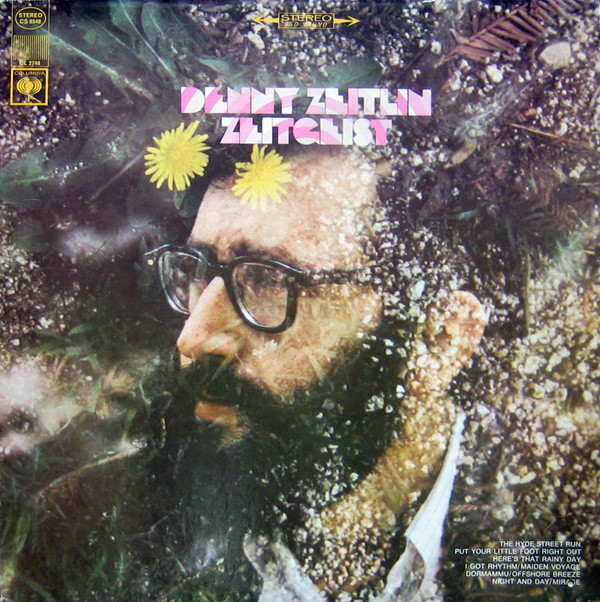
Undated Sunday afternoon in July or August 1971. Denny Zeitlin Trio.
It was a common practice for In Your Ear to book bands for Thursday-Sunday runs with the Sunday matinee being a ‘family show.’ One Sunday, the Denny Zeitlin trio was booked for a show, and my father and my brother attended. We were mainly interested because the rhythm section, drummer George Marsh and bassist Mel Graves, had until recently been members of the Jerry Hahn Brotherhood, a really great, but short-lived band that had one album on Columbia. Keyboardist Zeitlin was in a phase where he was experimenting with a lot of electronics, and he had brought an arsenal of electronic keyboards and synthesizers for the gig. Unfortunately, when we arrived, we were the only customers, so the group decided not to play the gig. As fate would have it, I wouldn’t get to see Zeitlin perform for another 35 years.
8/12-13/71 Pollution
Pollution was a Southern California rock-soul band that was where vocalist Dobie Gray got his start, sharing lead vocals with Tata Vega. They released two albums on Atlantic sublabel Prophecy in 1971 and 1972. Presumably this was touring behind the first release. An interesting sidelight about Pollution is that they were managed by Max Baer Jr., who played Jethro in the Beverly Hillbillies TV series.
8/18/71 Ligntnin’ Hopkins
Lightnin’ Hopkins was one of many early blues players that In Your Ear brought in during its brief tenure. Hopkins was a regular visitor to the bay area, so it is not surprising that he would show up in Palo Alto. During this era, he primarily performed solo but playing an electric guitar.
8/20-21/71 Bola Sete and His Band
8/25/71 Real Charles Ford Band
*8/26-27/71 Pure Food and Drug Act.
The Pure Food and Drug Act was a really interesting group that was based around electric violinist/vocalist Don “Sugarcane” Harris, who had been half of the 1950s doo-wop duo Don and Dewey and had more recently been part of bands led by Frank Zappa and John Mayall. Mayall’s USA Union band also included guitarist Harvey Mandel, who had previously worked with Canned Heat, the Barry Goldberg Reunion, and had recorded a series of great solo albums on the Phillips label, and was also in the Pure Food and Drug Act. Some of my friends and I were excited to see this group and headed down on a Friday evening to check them out. Unfortunately, PF&DA was a no-show, but we were treated to a great set by a pickup band fronted by lap steel guitar wizard Freddy Roulette instead.
9/15/71 Jeffery Cain and the Real Charles Ford Band.
Marin County folksinger Jeffrey Cain’s quirky acoustic folk tunes earned him a recording contract with Racoon Records, the Warner Brothers label run by the Youngbloods. He seems like a strange match for the Ford Band, but presumably they played after him.
9/16-19/71 Albert Collins
Electric blues guitarist Albert Collins was a regular visitor to the bay area during most of his career, often playing places like the Fillmore West and clubs like the Keystones. Always a dynamic live performer, it would have been great to see Collins in the intimate confines of In Your Ear.
*9/21-23/71 Hot Tuna
Starting in 1969, Jorma Kaukonen and Jack Casady had started playing one or more blues numbers in the middle of Jefferson Airplane sets, and were performing occasionally outside of the Airplane context that year in both electric (as documented on Before We Were Them) and acoustic contexts at places like the Matrix and the New Orleans House, where their debut album was recorded with harmonica player Will Scarlett. By that time, much of their repertoire was already in place, and in fact Jorma had been playing many of those tunes and basic arrangements since his folk club days in the early 1960s. On a number of occasions, 3-4 song Hot Tuna mini-sets appeared during Airplane shows in places like New York’s Fillmore East and the LA Forum, with Jorma, Jack, and Jdrummer Joey Covington joined by either Paul Kantner or, more often, Marty Balin on vocals.
During 1970, those Mini-sets within Airplane sets became common, and Hot Tuna, as a quartet with Balin, played a few shows on their own, apparently including a brief Alaskan tour and an outdoor gig in Washington DC as part of Warner Brothers’ Great Medicine Ball Caravan tour. They also took a jaunt to Alaska in May and did some ill-fated recording in Jamaica in June. When Papa John Creach Joined Tuna in October, the band became more of an independent entity, comprising Kaukonen, Casady, Creach and, starting in November, new drummer Sammy Piazza. This group, augmented once more by harmonica player Will Scarlett, closed out the year at Winterland as one of the opening acts for the Grateful Dead.
In 1971, the Airplane only played five gigs, and this gave Tuna much more leeway to play their own shows. Much like Jerry Garcia’s bands, In the Bay Area, Tuna played a lot, mostly supporting gigs in larger venues like the Fillmore West, Pepperland, and Winterland. On the East Coast, Tuna did three tours, starting with headlining performances at venues like the Fillmore East and the Capitol Theatre in January, starting to build a fanatical following in New York City that has continued to the present. They also played a few club gigs near home. The smallest place they played in the bay area was surely the Chateau Liberte in the Santa Cruz Mountains, a tiny roadhouse that held at most a couple of hundred people where they also recorded their second album, First Pull Up, Then Pull Down and later played a New Year’s show. The only other place of similar size they played during the year was In Your Ear, where they did this single three night stand. I was in College at UCSC by this time, but was able to make it over the hill for the Thursday night show, which I attended with my father.
The club was completely packed for this show, and we were only able to secure a table in the side room, which afforded a lateral view of the band, as they were set up facing towards University Avenue in the main room. This turned out to be fortunate, as this was easily the loudest concert I have attended over the years. Tuna had the same arsenal of amplifiers that they would use at the Fillmores or Winterland, and the high pitch of Papa John’s electric violin dug into my ear canals like a drill. Other than seeing the Airplane live for ten minutes at Winterland back in October of 1969, this was my first time seeing Jorma and Jack live, and they certainly did not disappoint. Tuna played one long set, mostly made up of material from their first and second albums. Unfortunately, I don’t have a set list. Creach’s bluesy violin extrapolations and Piazza’s propulsive drumming were the perfect foils for Jorma and Jack at this stage in their career, and they entered the studio a few weeks later to record what I consider the quintessential Hot Tuna album, Burgers.
10/1-3/71 Tim Buckley and Friends
1971 was allegedly rather a lost year for folk-jazz vocalist Tim Buckley, as he broke up his band in January after disappointing initial response to his 1970 album Starsailor (now considered a timeless classic) so this booking with ‘friends’ is a bit of a mystery. No idea who he played with or even if the shows took place.
10/4-5/71 Jerry Corbitt and Charlie Daniels
After guitarist Jerry Corbitt left the Youngbloods in 1969, he performed as a solo artist around the bay area and then teamed up with musician Charlie Daniels, who had produced the album Elephant Mountainfor the Youngbloods shortly after Corbitt left the band. And yes, this is the same Charlie Daniels who went on to become an outlaw country star with hits like “The Devil Went Down to Georgia.”
10/6/71 Childhood’s End
10/7/71 Gary Smith Blues Band
Harmonica player Gary Smith is one of a small group of hardworking Bay Area blues musicians who started in the late 1960s and early 1970s and continues to work clubs in the region.
10/8-10/71 Real Charles Ford Band
10/14-16/71 Sonny Terry and Brownie McGhee
10/21-23/71 Vince Guaraldi Trio
Although he is probably known best today for composing the music for the early Peanuts TV specials, Vince Guaraldi was an important part of the bay area jazz scene in the 1950s through 1970s, as a member of Cal Tjader’s band and later as a bandleader. In addition to the iconic “Linus an Lucy” from the Peanuts score, he was co-author of another jazz standard “Cast Your Fate to the Wind.” Although he received both a financial windfall and widespread publicity for his work on the Peanuts scores, Guaraldi toured rarely, preferring to gig at Bay Area jazz and supper clubs. Following this debut gig at In Your Ear, the club became a regular stop for Guaraldi through February of 1972, when he vanished from their schedule.
10/25/71 Mose Allison Trio
Jazz/Blues vocalist and pianist Mose Allison performed with his trio, rounded out by bassist Clyde Flowers and drummer Eddie Charlton. Allison obviously liked the intimate vibe of the club, and returned the next March with Wally Heider’s mobile recording truck to record his Atlantic album Mose In Your Ear, the only record I know of that was recorded at the club.
11/3/71 Larry Coryell
Jazz guitarist Coryell was in the midst of his psychedelic fusion period during this time, so this was presumably an electric show with his band Eleventh House.
11/4-6/71 Rockin’ Foo
Rockin’ Foo was a Los Angeles trio led by guitarist-vocalist Wayne Erwin, who previously did sessions with the Monkees and a very young Warren Zevon. They would have been touring behind their eponymous second album, and apparently broke up shortly thereafter.
11/9-10/71 Clifton Chenier and his Bayou Band
Arhoolie Records maven Chris Strachwitz was largely responsible for making the Bay Area a reliable home for Cajun and Zydeco musicians. After releasing an album by Chenier, Strachwitz brought Chenier and his Bayou Band to the Berkeley Blues Festival in 1966 after which he became a regular fixture in clubs throughout Northern California. Les Blank filmed a documentary about Chenier, Hot Pepper, which came out in 1973.
11/21/71 Pat Bisconti and Charlie Nothing
One of the more colorful groups that played In Your ear was the duo of artists Pat Bisconti and Charlie Nothing who performed various woodwind and reed instruments and, most notably, played on exotic metal guitar like instruments called dingulators that were fashioned by Nothing from car parts thanks to welding tools he inherited from sculptor Ron Boise, who had fashioned a musical sculpture called the Thunder Machine for the Merry Pranksters back in the 1960s. You can get a sense of what a dingulator performance sounded like
here and
here is a link to a solo saxophone album that Nothing released in 1967. Apparently they had a following, as the duo were booked another three times in late 1972.
11/26-27/71 Mike Nock Group.
New Zealander Mike Nock previously played keyboards for Bay Area jazz fusion band The Fourth Way, who recorded three albums between 1968-1970. Presumably his eponymous group continued in this vein. Nock moved to Australia in the 1980s and maintains an active recording and performing career. Nock and his band became regulars at In Your Ear, playing an additional seven dates at the club during 1972.
12/3/71 Real Charles Ford Band
12/4/71 Charlie Musselwhite and the Real Charles Ford Band
During this period, Musselwhite often performed around the area with the Ford Band backing him up.
12/7/71 Sugar Pie DeSanto
Oakland R&B singer Sugar Pie DeSanto had recorded and toured with Johnny Otis and James Brown before settling in the bay area in the late 1960s. A powerful live performer, DeSanto remained a fixture in bay area clubs and blues festivals to the present day.
12/13/71 Little Frankie Lee and the Real Charles Ford Band
Dynamic vocalist Little Frankie Lee started his career in Texas, where he had hits with tunes like “I Gotta Come Back” and “Full Time Lover.” He relocated to California in the 1960s and continued to perform and record until his death in 2015.For this gig, It’s not clear whether he performed with his own band or was backed up by the Fords.
12/15/71 Ruby Delicious
A solid funk band that was fronted by vocalist Delicious had a regional hit with a sizzling cover of Aretha Franklin’s “Rock Steady.”
*12/21-23/71 Vince Guaraldi
During a pre-Christmas run at the club, my whole family went to see Vince Guaraldi for theFriday night date of their residency. Guaraldi was on a Fender Rhodes electric piano, and was accompanied by electric cassist Koji Kataoka, drummer Mike Clark, and sax/flute player Vince Denham. We ended up at a table directly in front of the stage, My father had a circadian rhythm that got him up very early in the morning (something I inherited), and it had been a long week, so he started to nod off despite the great music being played a few feet from him. Denham apparently took his somnolence as a challenge, and spent a good bit of his solo time during the set blowing right in my dad’s direction trying (unsuccessfully, as I remember) to wake him up. The quartet played a great set, stretching out on standards and closing, inevitably, with a jam band-style extrapolation of “Linus and Lucy.”
12/28/71 Vince Guaraldi
12/29/71. Swifty Galoose and the Chartreuse Goose
No idea..
12/30/71-1/1/72 Real Charles Ford Band
Sounds like this was a great way to round out the year and bring in 1972.
1/5/72 Gabor Szabo
In 1972, Jazz guitarist Gabor Szabo was in the midst of a run of commercially successful albums on Blue Thumb and CTi that mixed radio-friendly originals with light jazz versions of contemporary pop and rock tunes. As In Your Ear started to shift its bookings towards more touring jazz acts, Szabo’s band was a logical addition to their schedule.
1/10/72 Dennis Geyer.
Guitarist-vocalist Dennis Geyer was the front person for the excellent rock-blues quartet A.B. Skhy, who had relocated from Wisconsin to San Francisco during the late 1960s and released two great albums on MGM records. After A.B. Skhy broke up in 1970, Geyer apparently fronted his own band which played In Your Ear several times. He later played with Queen Ida’s Bon Temps Roulez and has recorded with a number of Marin County musicians over the years, both on records and at live gigs.
1/11/72 Vince Guaraldi
1/12/72 Group Therapy
It is possible that this was the New York area band that had two albums out on Phillips in the late 1960s. Alternately, it could be another bay area ensemble lost in the sands of time.
1/13-15/72 Sonny Terry and Brownie McGhee
1/17/72 Mordecai and the Doctor and the Dennia Geyer Band
1/19/72 Frontier
I couldn’t find anything on either Mordecai and the Doctor or Frontier
1/20-22/72 Bobby Hutcherson with Essra Mohawk
 This sounds like an intriguing double bill
 , with vibe virtuoso Hutcherson’s straight ahead jazz band paired with keyboardist-singer-songwriter Essra Mohawk’s folk-jazz tunes. Unlike the fusion and funk experiments of many of his peers, Hutcherson’s work as a bandleader focused on relatively conventional acoustic jazz. Mohawk, whose original name was Sandy Hurwitz, had previously recorded on Frank Zappa’s Straight label and was briefly in the Mothers of Invention. Her albums during this period were soulful jazz-folk somewhat reminiscent of Laura Nyro’s work at the time. Incidentally, a few tracks on her 1971 album Primordial Lovers featured the core of the Jerry Hahn Brotherhood before they had recruited keyboardist-vocalist Mike Finnigan. In 1981, she was briefly one of the first background singers for the Jerry Garcia Band.
1/27-29/72 Dennis Geyer Band
1/31/72 Chris Darrow
Southern California multi-instrumentalist Chris Darrow was a member of both the Nitty Gritty Dirt Band and Kaleidoscope before releasing the first of many solo albums in 1972. This gig must have gone well, as he returned for a weekend stint at the club in March.
2/1/72 Vince Guaraldi and Kathie Marion
Kathie Marion opened five gigs for Guaraldi and one for Oganookie, but I couldn’t find anything about her. Perhaps she sang with Guaraldi’s group, but probably not with Oganookie.
2/2-5/72 Gabor Szabo
2/7/72 Floating House Band and Victrola
The Floating House band was an acoustic guitar-vocal trio that had one album on bay area folk label Takoma Records that was vaguely reminiscent of a spaced out alter ego of pop-folk band America.
2/8/72 Vince Guaraldi and Kathie Marion
2/9/72 Mance Lipscomb and Slap Jack Poulin
Texas bluesman Lipscomb was another musician coaxed onto the folk revival circuit thanks to recordings made by Chris Strachwitz, who released seven Lipscomb albums on his Arhoolie label. In 1970, Lipscomb was the subject of a film produced by Les Blank. I couldn’t find any information on Slap Jack Poulin, but he did return for a solo billing two weeks later.
2/10/72 Wolfgang and Strauss
2/11-13/72 Shanti and Mellow Mountain
2/15/72 Vince Guaraldi and Kathie Marion
2/16/72. Victrola
2/17-20/72 Kenny Burrell Quartet and Judy Mayhan

This appears to be the only run of dates that jazz guitarist Kenny Burrell played at the club. In 1972, he had just begun recording for Oakland’s Fantasy Records. Although I couldn’t find the members of his touring band in 1972, he regularly performed in a quartet format with piano, bass and drums. Judy Mayhan has had a long career as a folk-jazz singer songwriter. Born in the Midwest, she moved to New York in the early 1960s where she was part of the burgeoning folk scene in Greenwich Village. She recorded mainstream albums for Atlantic in 1970 (at Muscle Shoals, where she recorded with an all star crew including Duane Allman, and in Hollywood, with assistance from Lowell George and Richie Hayward and Decca in 1971. Mayhan has remained active as performer and recording artist since then, mostly in northern California.
2/21/72 Slap Jack Poulin
2/22/72 Vince Guaraldi and Kathie Marion
2/23/72 Cisco Friederich Rasmussen
?
2/27/72 John Klemmer.
Saxophonist Klemmer was an early experimenter in jazz fusion, most notably on his 1969 Chess album Blowin' Gold. By the early 1970s, he had moving towards the more smooth jazz arena that has defined much of his career and was recording for Impulse.
2/28/72 Robben Ford
After cutting his teeth in live performances at In Your Ear as lead guitarist for the Real Charles Ford Band, Robben Ford returned for this one gig as a solo headliner. Fame and fortune were just around the corner.
2/29/72 Vince Guaraldi and Kathie Marion
3/13-14/72 Chris Darrow
3/21/23 The Beans and Rebecca Williams
Rock band the Beans moved from Arizona to the bay area in the late 1960s, where they played clubs like In Your Ear and Santa Cruz’ Catalyst from 1969-1972, when they merged with members of another Phoenix band, the Red White and Blues Band to form the Tubes. Based on this date and the Tubes booking a month later, that transition apparently took place in late March or early April 1972.
4/4-5/72 Charles Moffett and the Moffettes
Jazz drummer Charles Moffett had a music school in the bay area and performed with a group called the Moffettes made up of his music students, including four of his children. One of his sons, bassist and composer Charnette, started playing in the band at age 7, and later moved to New York City, playing with a who’s who of top jazz musicians, and releasing a long series of albums under his own name.
4/6/72 Mike Nock Trio
4/7-8/72 Luis Gasca’s Band.
Trumpet player Luis Gasca was a regular member of the Latin jazz-rock community in San Francisco, both as a bandleader and a sideman. He released a landmark album in 1971 entitled
For Those Who Chant which featured the entire Santana Band of the time, along with saxophone master Joe Henderson.
4/9-10/72 Big Mama Thornton
Blues Singer Big Mama Willa Mae Thornton had an active and periodically successful career from 1947-1984. She is best known for having been the first to record Lieber and Stoller’s early rock anthem “Hound Dog” and later for writing “Ball and Chain,” which became one of Janis Joplin’s signature numbers. Born in Alabama, Thornton’s early career was in Houston, where she worked with Johnny Otis and recorded “Hound Dog,” her version of which sold over half a million copies. In the late 60s, she was another artist who moved to the Bay Area to record for Arhoolie Records. By the late 1960s, she had another career high when she recorded for Mercury and Pentagram records. Starting in the early 1970s, she began struggling with alcohol abuse that ultimately led to health problems that led to her death in 1984. This pair of dates appears to be the only booking she had at In Your Ear, but she was a fixture at Bay Area clubs and blues festivals at the time.
4/11-12/72 Hadley Caliman Sextet
Saxophone/flute player Hadley Caliman had a long and successful career. During the early 1970s, he was particularly active working with California musicians like Joe Henderson, Bobby Hutcherson, and Freddy Hubbard. At this time, Caliman was recording as albums for Mainstream records that were relatively smooth jazz/funk. Moving to the Seattle area, Caliman continued performing regularly until his death in 2010.
4/13/72 Mike Nock Group
4/16/72 Blue Mountain
Blue Mountain was a large rock band that featured some classmates my high school (Cubberley) in Palo Alto. Although they never released any recordings, they gigged extensively around the bay area and became semi-regulars at In Your Ear and at the Chateau Liberte.
4/17/72 Bayete and his Quintet.
Pianist Todd Cochran changed his performing name to Bayete in the early 1970s. During this time, he was recording for Prestige Records, who released two jazz fusion albums in 1972 during a period he was also working with Bobby Hutcherson, sax/flute player Hadley Caliman and bassist James Leary. A few years later, Cochran was the keyboardist, songwriter, and vocalist for the space rock group Automatic Man, which had a major label record deal largely thanks to ex-Santana drummer Michael Shrieve’s pedigree. Later, Cochran worked with an amazingly diverse roster of musicians including Peter Gabriel, Stanley Clarke, Carl Palmer, Maynard Ferguson, Joan Armatrading, and Freddie Hubbard. In the 2000s, he added a successful new career to his resume doing scores for movies.
4/20/72 Mike Nock Group
4/21-22/72 Mike White Group
When jazz fusion band the Fourth Way broke up in 1970, electric violinist White, like keyboardist Mike Nock, became leader of an eponymous band. White, who had attracted notice as a member of John Handy’s seminal quintet prior to joining the Fourth Way, recorded a couple of albums for Impulse Records in the early 70s with a band rounded out by pianist Ed Kelly, bassist Ray Drummond, and (on the 1972 release Spirit Dance) drummer Kenneth Nash.
4/23/72 Mike Nock Trio
4/24-26/72 Mose Allison Trio.
Recording the live album Mose In Your Ear for Atlantic Records.
4/27/72 Mike Nock Trio
4/28/72 Loading Zone
The Loading Zone was among the first wave of San Francisco rock bands, playing the Trips Festival in 1966 and opening for many of the other SF Bands during the heyday of the ballrooms. From 1967 to 1969, they featured the dynamic lead vocals of Linda Tillery, who subsequently went solo and recorded Sweet Linda Devine, produced by Al Kooper. By 1972, the Zone was near the end of its musical rope, with keyboard player Paul Fauerso handling lead vocals. In 2008, the core of the group – Fauerso, drummer George Marsh, and bassist Mike Eggleston, reunited briefly and released an album Blue Flamecomposed of new material and selections from an unreleased 1969 studio album, and performed at least one show that I attended, at Berkeley’s Freight and Salvage. Incidentally, the late era Loading Zone performed at my high school graduation in 1971.
4/30/72 The Tubes
The Tubes had played a bit over a month earlier under their previous name, the Beans. Although they were not to release their debut album for another three years, the Tubes were already developing the elaborate stage shows that that became their trademark. A version of the band still tours and records. Their former keyboard player, Vince Welnick, later joined the Grateful Dead, and appears to be the only Dead member to have played at In Your Ear.
5/10/72 Earle Davis and the Majic Exploration Band
Trumpet player/bandleader Earle Davis was part of the jazz scene in New York in the late 1950s-early 1960s. Moving to the bay area in the late 1960s, he led a number of different lineups, which were usually called the Majic Spirit Band. Not sure why his group was billed as the Majic Exploration Band for this gig.
5/11-14/72 Jon Hendricks and the Art Lande Trio
Jazz pianist Art Lande was relatively early in his career at this point, but he went on to record a duet album with sax player Jan Garbarek, to found the Rubisa Patrol with trumpeter Mark Isham, and to record with artists like Paul McCandless and Gary Peacock. Lande remains active as a performer, teacher, and recording artist.
5/16/72 Stuart Little Band
The Stuart Little Band was a six-piece Stockton area psychedelic rock band that was active in California clubs and concert halls from 1969-1976. Although they never released an album during their performing lifetime, a
CD of studio recordings of the band was released in 2015, along with a book chronicling the band’s history written by the band’s flute player David Hoeim.
5/18/72 Billy Mitchell and Company
There were two active jazz musicians named Billy Mitchell at this time, one a tenor sax player who had a long and varied career with jazz icons like Thad Jones, Dizzy Gillespie, and Count Basie. The other Mitchell was a piano player who didn’t start recording until the late 1970s and got his start in New York. I’d bet this gig was the sax player’s.
5/19/92 Bobby Hutcherson Quartet
5/23-25/72 Jack Bonus.
Saxophonist/songwriter Jack Bonus did a lot of sessions for people like Tom Paxton, the Rowan Brothers, and Earth Opera, the eccentric late 60s rock band fronted by Peter Rowan and David Grisman. Bonus recorded one equally strange album for the Airplane’s label Grunt that came out in 1972, so this may have been a record release of sorts. Today he is probably best known for penning “The Hobo Song,” which Peter Rowan sang on the debut album by Old and In the Way and has since become somewhat of a jamgrass standard. Bonus passed away in 2013.
5/26-27/72 Michael White’s Quartet
6/10/72 Zoot Sims
Jazz saxophonist Zoot Sims had a long jazz career, playing in big bands in the 1940s, recording with luminaries like Jack Kerouac and Chet Baker in the 1950s, and playing with a who’s who of veteran jazz musicians in a variety of settings until his death in 1984.
6/12/72 Blue Mountain
6/15-16/72 Jon Hendricks with Larry Vucovich Trio
This sounds like it would have been a great gig, with master jazz vocalist Jon Hendricks performing with pianist Larry Vukovich’s trio. Vukovich worked steadily with Hendricks during this period, after performing similar accompaniment with vocalist Mel Torme. Hendricks was a member of popular jazz vocal trio Lambert, Hendricks and Ross, and created a popular musical, the Evolution of the Blues, which debuted at the 1960 Monterey Jazz Festival and later had successful theatrical runs in San Francisco and Los Angeles. In 1966 he cut a very obscure single “Fire in the City”/”Your Sons and Daughters” with the Grateful Dead that was part of the soundtrack of an independent film also entitled Fire in the City.
6/17-18/72. Luis Gasca with EdMcCleer and Mark Lawshe
6/20-21/72 David Pomeranz and the Dick Conte Group
Early in his career as a singer-songwriter, David Pomeranz was recording his first solo albums and playing clubs like In Your Ear. Only 21 at the time, Pomeranz already had two Decca albums under his belt, but he was to go on to a multi-platinum career as a performer, songwriter for artists like Barry Manilow and Donna Summer, and writing scores for films and theatrical productions. Jazz pianist Dick Conte has been a regular performer and jazz DJ in the bay area since the early 1960s.
6/22-24/72 Cal Tjader.
Vibraphone player Tjader, although of Swedish extraction, played an important role in popularizing Latin jazz in the Bay Area. He performed with Dave Brubeck during his college years and later become a wildly popular bandleader whose groups included notable sidemen like Vince Guaraldi, Mongo Santamaria, and Willie Bobo, whose “Soul Sauce” was a top 40 hit for Tjader in 1964. During this period, he was recording on Fantasy records and flirting with fusion.
6/27-28/72 JuJu
JuJu was a sextet that performed an airy style of free jazz and recorded a couple of albums on Black Fire in the early 1970s. Although the band was based in the DC area, leader James “Plunky” Branch had lived in the bay area for awhile and maintained connections there, so this was likely an unusual west coast road trip for the group. Alternately, this may have been a different band with the same name.
6/29-30/72 Mike Nock Group
8/5-7/72 Mose Allison Trio and the Real Charles Ford Band
8/11/72 John Lee Hooker
Blues guitarist-vocalist John Lee Hooker was a long-time bay area resident, so the only thing surprising about his booking at In Your Ear was that it didn’t happen sooner. In 1971, he was in the midst of one of several commercial high points in his career, having justrecorded the seminal Hooker and Heat with Canned Heat. Hooker and Heat was followed quickly by two albums on ABC, Endless Boogie and Never Get Out of these Blues Alive, both featuring guest shots from friends like Steve Miller, Van Morrison (with whom Hooker occasionally shared club bills with during this time), and Elvin Bishop.
8/16/72 Asleep at the Wheel
Best known as a Texas western swing band, Asleep at the Wheel was founded in West Virginia, and spent 1970-73 living in Oakland California, where they moved at the recommendation of friends Commander Cody and the Lost Planet Airmen. The two bands often shared billings, and they were pretty much the only bands playing western swing and country music in the Bay Area at the time. Despite myriad personnel changes over the years, Asleep at the Wheel, who relocated to Texas in 1974, are still going strong, thanks to the efforts of leader-guitarist and sole original member Ray Benson.
8/18-19/72 Mike Nock with Eddie Marshall and Ron McClure
For most of his shows at In Your Ear, Nock was presumably supported, as he was here, by the former Fourth Way rhythm section of drummer Marshall and bassist McClure.
8/22/72 Blackjack
8/23/72 Asleep at the Wheel
8/24/72. Noema
8/28/72 Blue Mountain
9/13/72 Asleep at the Wheel
9/14-15/72 Bobby Hutcherson Quartet
9/29-30/72 Blue Mountain
10/9/72 Luther Tucker Thing
Blues guitarist Luther Tucker had impressive credentials before fronting his own band, having served in Muddy Waters and later James Cotton’s bands in the late 1960s before going out on his own in the early 1970s. He was a regular at In Your Ear during its last months of operation. During this era, Tucker also worked with John Lee Hooker, and did not record under his own name until the 1990s, when he also did an album with the temporarily reunited Ford Blues Band.
10/10/72 Bobby Hutcherson/Bisconti and Nothing
One can only imagine what Hutcherson’s conservative jazz audience thought of Bisconti and Nothing’s surrealistic dingulator explorations.
10/12/72 Zytron with Bert Wilson and David Pomeranz
Zytron was a Big Sur-based ensemble jazz-funk ensemble featuring keyboardist David Kempton, sax player Bert Wilson, and drummer James Zitro. It is unclear from this booking whether Pomeraanz was playing with the group (hard to imagine, given the disparate styles involved) or opening for the group. Music and more information on Zytron can be found here.
https://www.davidkempton.com/rec/zytron/
10/16/72 Luther Tucker Thing
10/18/72 Oganookie and Kathie Marion
10/26/72 The Space Rangers
This is another mystery. Rock guitarist Neil Meriwether put together a band with that name in 1974, but presumably this was someone else.
11/4/72 Jon Hendricks and Hues
I’m not sure if Hues was the LA Band the Hues Corporation. The timing works, and this was before that group had their big commercial breakthrough starting in 1973 and accelerating with their big hit “Rock the Boat” in 1974. As yet unrecorded, the Hues Corporation were featured as themselves in 1972 in the film Blacula.
11/7/72 Pat Bisconti and Charlie Nothing
11/8/72 Phantoms of the Opry
In Your Ear didn’t book much bluegrass, but they did bring in this sterling bay area group that featured Pat Enright, later with the Nashville Bluegrass Band on guitar and vocals and a very young Laurie Lewis on bass.
11/9/72 Noema
11/13/72 Luther Tucker’s Blues Band
11/16/72 Sunnyland Slim Blues Band with Michael Bloomfield
Chicago blues pianist-vocalist Sunnyland Slim apparently made a rare visit to the bay area in 1972, and was billed with Michael Bloomfield, who had jammed with Slim on numerous occasions back in Bloomfield’s formative years in Chicago blues clubs. At this point, Bloomfield had largely retreated from the rock spotlight, instead focusing on low-key gigs like this one.
11/20/72 Luther Tucker’s Blues Band
11/23-25/72 Bluesberry
11/27/72 Luther Tucker Band
11/28/72 Pat Bisconti and Charlie Nothing
12/8-9/72 Jimmy McCracklin and His Band
Blues/R&B Pianist-vocalist Jimmy McCracklin’s career stretched back to the 1940s, when he started performing at Richmond, California venue Club Savoy. In the 1950s, McCracklin had a hit with an infectious boogie tune “The Walk.” During the period of this booking, McCracklin operated his own club, the Continental, in San Francisco. McCracklin remained active well into the early 200s, and passed away in 2012 at the age of 91. One of his other best known songs, “Think,” was a regular part of the repertoire of Jerry Garcia’s electric bands.
12/11/72 Frankie Beverly’s Raw Soul and Auditions
Raw Soul was the band that Beverly led in the bay area during the early 1970s before he was encouraged to change the group’s name to Maze, after touring for several years as opening act for Marvin Gaye. Maze became a hit machine, with nine gold albums released during the 70s through the 90s. Another example of an artist on the cusp of mass popularity playing at the tiny Palo Alto venue.
At this point, In Your Ear’s days were numbered. Presumably they continued to book acts for the rest of December, but I was unable to find any subsequent listings. Sadly, the club reached the end of the line on New Year’s eve 1972, when a fire started by the club’s pizza oven essentially destroyed the building. Today the site of the club is occupied by a modern building housing a mattress store – a fate similar to that of the former Dana Morgan’s music store a few blocks away. Although both the Stanford and Varsity Theatres further up University Avenue held occasional musical events in subsequent years, the closing of In Your Ear essentially brought an end to live music venues in downtown Palo Alto.


 vocalist-guitarist Dan Adrien that recorded two albums for London Records. I saw them around this time at the Boarding House in San Francisco, where they opened for musical comic Martin Mull.